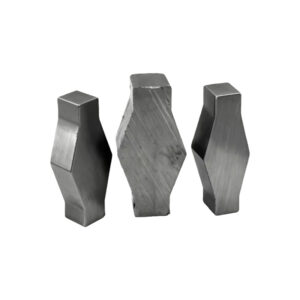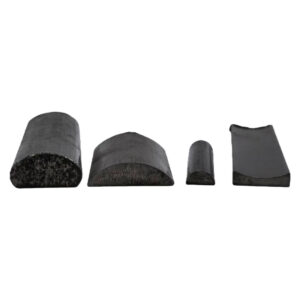

Bright steel bar is cold-formed steel known for its smooth surface finish and high dimensional accuracy1. Manufactured through processes like cold drawing or grinding, it offers far tighter tolerances and cleaner finishes than hot-rolled alternatives, reducing machining costs and material waste2. Despite its name focusing on appearance, its real value lies in precision engineering and controlled mechanical properties.
Bright steel bar is a semi-finished product used for further machining—not a final component—making it ideal for applications requiring tight tolerances, excellent straightness, or refined finish.
Bright steel bars minimize surface defects and simplify production processes. Let’s explore surface finish types, material grades, and typical use cases to make an informed buying decision.
How Different Is Bright Steel Bar from Hot-Rolled or Ground Bars?
Bright steel bar solves two main problems: rough surfaces and loose tolerances. It undergoes surface refining and shaping processes that significantly outperform hot-rolled steel in accuracy and finish. However, some misconceptions persist.
Unlike hot-rolled steel, the bright bar’s cold forming process removes impurities while creating tight dimensional tolerances like ±0.05 mm3—a necessity for precision machining.
- Hot-rolled steel bars feature a rough, scaled surface and are usually used for non-critical applications or further reshaping.
- Ground bars exceed the refining of bright bars in tolerance and smoothness, often achieving specs like ±0.02 mm, but at higher costs.
Bright finish results from cold working methods rather than finishing operations, making it versatile yet cost-effective for industrial manufacturing.
Common Misunderstandings About Bright Steel Bar
Bright steel is often misidentified as chrome-plated rods or as featuring universally tight tolerances. These assumptions overlook key distinctions:
- Chrome-plated rods undergo post-production grinding and application of hard chrome coatings for wear resistance.
- Dimensional control for bright bars varies by supplier (e.g., some meet only ±0.1 mm tolerances, while others offer tighter).
When sourcing materials, confirming specification details like tolerance range and finish type will prevent unexpected machining inefficiencies or product mismatches.
How Is Bright Steel Bar Manufactured?
Bright steel bars aren’t merely refined hot-rolled stock—they’re forged through specialized cold forming procedures designed to balance durability and precision. Typical steps include:
Production Steps:
- Hot-Rolled Material Preparation (e.g., scale removal via shot blasting or cleaning).
- Cold Drawing through dies for size reduction, dimensional fixes, and surface smoothing.
- Polishing (optional): Enhances surface brightness for improved machining compatibility.
For diameters under 100 mm, cold drawing generally delivers excellent tolerances. Larger sizes, however, may require centerless grinding for higher accuracy.
What Material Grades Are Available for Bright Steel Bars?
Bright steel bars are offered in various carbon, alloy, and stainless grades tailored to application-specific needs. YaDa Metal specializes in these common grades:
Common Carbon Steel Grades
- 1018 (S20C): Low-carbon steel ideal for machining.
- 1045 (S45C): Medium-carbon variety combining strength and hardness—perfect for mechanical parts.
Popular Alloy Steels
- 4140 (SCM440): For high-stress machinery requiring excellent toughness after heat treatment.
- 20CrMnTi: Gear steel for applications demanding hardness and wear resistance.
Selecting grades depends on machining ease, strength requirements, and application compatibility. Heat-treated materials provide added durability where needed, ensuring tailored performance.
What Are Bright Steel Bar Applications?
Bright steel bars bridge precision manufacturing and industrial efficiency, suiting diverse industries. Applications include:
- Automotive: Transmission shafts and suspension systems optimize balance and fit using precision profiles.
- Hydraulics: Serve as base materials for piston rods prepped for chrome plating.
- Machinery Components: Stabilized shafts for CNC machining applications.
- OEM Production: Custom profiles simplify industrial assembly costs.
By reducing material waste through narrow machining margins, bright steels offer value in high-stress industrial contexts.
Frequently Asked Questions
Can bright steel bars be used for hydraulic cylinders?
No, hydraulic cylinders require chrome-plating over bright bars to enhance wear resistance and surface hardness.
How does cold drawing affect dimensional accuracy?
Cold drawing reduces diameter variances to tolerances like ±0.05 mm4 for precision applications, improving machining efficiency.
What surface finish options exist for bright steel bars?
Common finishes include cold-drawn brightness, polished refinement, and grinding for ultra-smooth, tight-tolerance outcomes.
Conclusion
Bright steel bars stand out for their dimensional precision and clean surface finishes, offering reliability in machining-heavy industries. They are a semi-finished product tailored toward reducing costs, improving engineering designs, and bolstering durability5 across sectors. If you're sourcing bright steel materials, confirm grades, tolerances, and supplier processes—these factors matter most when optimizing efficiency.
For inquiries about high-precision bright steel bars or customized profiles, contact YaDa Metal for professional support.
"Stainless Steel Bright Bars: Uses, Benefits & Manufacturing ...", https://www.shalco.com/blog/stainless-steel-bright-bars-manufacturing-process-applications-advantages. Bright steel bars are widely recognized for their smooth surface finish and high dimensional accuracy, which are achieved through cold-forming processes such as cold drawing and grinding. Evidence role: general_support; source type: education. Supports: Bright steel bars are cold-formed steel products known for their smooth surface finish and high dimensional accuracy.. ↩
"Cost Saving by Using Free Cutting Steel Bars", https://ambhe.com/cost-saving-free-cutting-steel/?srsltid=AYCX9vIa6b1IPFilpfbTx6hFv3FaZhAUr-97rCaMEFhcTU_eQVb5iVRQ. Studies indicate that bright steel bars, due to their tighter tolerances and smoother finishes, can reduce machining costs and material waste compared to hot-rolled steel. Evidence role: general_support; source type: research. Supports: Bright steel bars reduce machining costs and material waste compared to hot-rolled steel.. Scope note: The extent of cost and waste reduction may vary depending on specific machining processes and applications. ↩
"TOLERANCE HANDBOOK", https://fpg.phys.virginia.edu/fpgweb/useful_info/tolerances_steel.pdf. Cold-drawn bright steel bars are commonly manufactured to achieve dimensional tolerances as tight as ±0.05 mm, making them suitable for precision applications. Evidence role: statistic; source type: research. Supports: Bright steel bars achieve tight dimensional tolerances like ±0.05 mm through cold forming processes.. Scope note: Tolerance levels may vary depending on the specific manufacturing process and standards followed by different suppliers. ↩
"Cold Drawn Seamless Steel Tube Tolerances - YIGE", https://hnyigesteel.com/cold-drawn-seamless-steel-tube-tolerances/. Cold drawing processes are capable of achieving dimensional tolerances as tight as ±0.05 mm, making them suitable for high-precision applications. Evidence role: statistic; source type: education. Supports: Cold drawing reduces diameter variances to tolerances like ±0.05 mm for precision applications.. Scope note: Tolerance levels may vary depending on the specific equipment and standards used. ↩
"Bright Steel Bars vs Black Steel: Key Differences", https://myroyalsteels.com/bright-steel-bars-vs-black-bars-which-is-better-for-precision-engineering/. Bright steel bars are valued in engineering for their ability to reduce machining costs, enhance design precision, and improve material durability. Evidence role: general_support; source type: research. Supports: Bright steel bars reduce costs, improve engineering designs, and bolster durability across sectors.. Scope note: The extent of these benefits may vary depending on the specific application and industry. ↩